What is the difference between contractor and solution provider? What is the contractor definition? Independent entity that agrees to furnish certain number or quantity of goods, material, equipment, personnel, and/or services that meet or exceed stated requirements or specifications, at a mutually agreed upon price and within a specified timeframe to another independent entity. What is solution provider definition? An umbrella term for an organization that offers a combination of product, installation, and design. handles the project needs of their client from concept to installation. This process normally involves studying the client’s current infrastructure, evaluating the client’s needs, specifying the mix of manufacturers’ product and feasible design required to meet project goals. Vision: Solutions provider companies are generally the companies that can look after your project throughout its entire duration. They can help you understand your operating requirements and running cost and can then develop a design and construct the design accordingly. What is the role of energy efficiency solution provider? understand the logic behind the behavior of building industry and that is important for successful development and deployment of proper technologies. Providing benchmarks on sustainable buildings is an essential requirement for decision makers to take the correct call of action to encourage energy efficient buildings. Solutions aiming to improve the energy efficiency of buildings and construction activities should be disseminated widely, making use of existing or new technology transfer programs. Influencing market mechanisms and encouraging research and development projects. Access to top notch technologies: In many aspects, this is like comparing apples and oranges, as one company does the whole project, and the other just undertakes part of the project (contracting job). All the companies have access to the same materials, the same staff and operate within the same timelines, however, solution provider companies have an access to latest and top notch technologies and have a real partnership with reputed global technologies manufacturers. The difference really comes from understanding the bigger picture, strong relationships with technology manufacturers, high exposure to the top notch technologies, have experts of energy efficient solutions and ensuring that technical support during design, execution, and start-up. When to use solution provider? if you have the vision to achieve your energy efficient building and have solid plans for how your operating cost and energy bills will look, you want to create a unique building that catches your business imaginary, cut you energy bills and works efficiently. solution provider has a real vision would definitely be your best option. they will undertake all of the planning and design that goes into – in other words a seamless turnkey solution. 365 Ecology is an integrated One Stop Shop engineering solutions house specialized in energy efficient cooling and heating solutions including and not limited Variable refrigerant flow Air Conditioning, Solar Water Heating, Heat pump, desert coolers and indirect evaporative cooling. Unlike most clean technology companies, we tend to focus on achieving energy savings via introducing a top notch technology of energy efficient systems.We offer a broad spectrum of services to make sure that your project is being effectively managed from start to finish and your energy needs are met. As we go into full force we start with evaluating your current energy consumption practices and needs in order to design a system that works best with your lifestyle in terms of being both energy-efficient and cost-effective while taking care of supplying and installing cutting-edge energy efficient technology.
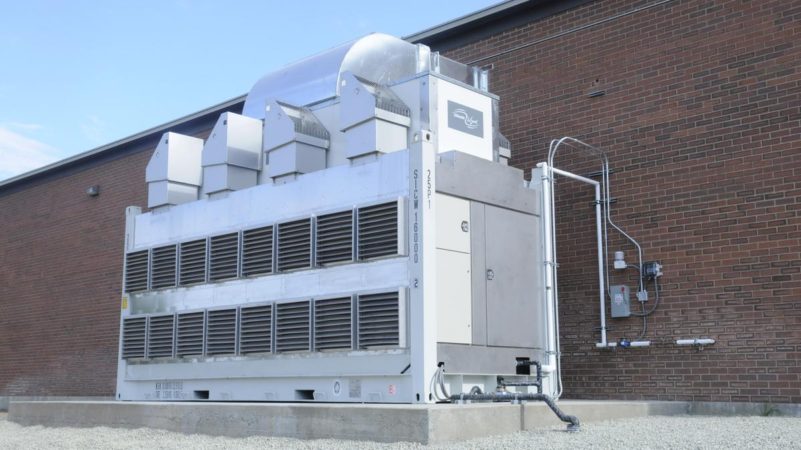
365 Ecology is an integrated One Stop Shop engineering solutions house specialized in energy efficient cooling and heating solutions including and not limited Variable refrigerant flow Air Conditioning, Solar Water Heating, Heat pump, desert coolers and indirect evaporative cooling. Unlike most clean technology companies, we tend to focus on achieving energy savings via introducing a top notch technology of energy efficient systems.
In large-volume spaces such as atria and covered malls, smoke management systems are often an important aspect of fire protection, with their primary goal being to ensure that the impact of smoke and heat on occupants is not life threatening This involves keeping the height of the smoke layer above the highest level of occupancy for a defined period, longer than the expected time to evacuate the building. Smoke Control Vs Smoke Management Smoke control systems use fans to pressurize appropriate areas to limit smoke movement in a fire situation. Smoke management systems include pressurization and all other methods that can be used singly or in combination to modify smoke movement. Smoke Management Approaches The following approaches can be used to manage smoke in atriums: Smoke filling: This approach allows smoke to fill the atrium space while occupants evacuate the atrium. It applies only to spaces where the smoke filling time is sufficient for both decision making and evacuation. Nelson and Mowrer (2002), Chapter 4 of Klote and Milke (2002), and Proulx (2002) have information on people movement during the evacuation. The filling time can be estimated either by zone fire models or by filling equation Unsteady clear height with upper layer exhaust: This approach exhausts smoke from the top of the atrium at a rate such that occupants have sufficient time for decision making and evacuation. It requires analysis of people movement and fire model analysis of smoke filling. Steady clear height with upper layer exhaust: This approach exhausts smoke from the top of the atrium to achieve a steady clear height for a steady fire. our calculation method is presented here based on this approach. Steady clear height with upper layer exhaust Definitions Atrium: A large-volume space created by a floor opening or series of floor openings connecting two or more stories that is covered at the top of the series of openings and is used for purposes other than an enclosed stairway ; an elevator hoist way; an escalator opening; or as a utility shaft used for plumbing, electrical, air-conditioning, or communications facilities. Clear height: Is the distance from the top of the fuel to the interface between the “clear” space and the smoke layer. Also called design height. Clear height Design Fires: The design fire has a major effect on the atrium smoke management system. Fire size is expressed in terms of rate of heat release. Steady fires have a constant heat release rate. Steady design fire sizes for atriums ‐ Minimum fire for fuel‐restricted atrium = 2000 kW ‐ Minimum fire for atrium with combustibles = 5000 kW ‐ Large fires = 25000 kW ASHRAE Handbook 2007 52 ‐ Table (2) Plume: A column of smoke that rises above a fire Axisymmetric Plume: A plume that rises above a fire, does not come into contact with the wall or other obstacles, and is not disrupted or deflected by airflow. Smoke Layer: The accumulated thickness of smoke below a physical or thermal barrier. Plugholing The condition where air from below the smoke layer is pulled through the smoke layer into the smoke exhaust due to a high exhaust rate. Makeup Air: Makeup air has to be provided to ensure that the exhaust fans are able to move the design air quantities and to ensure that door opening force requirements are not exceeded. The large openings to the outside can consist of open doors, open windows, and open vents. The large openings to the outside do not include cracks in the construction, gaps around closed doors, gaps around closed windows, and other small paths. It is recommended that make up air is designed at 85 percent to 95 percent of the exhaust not including the leakage through these small paths. The maximum value of 200 ft/min (1.02 m/sec) for makeup air is to prevent significant plume deflection and disruption of the smoke interface. Calculations Procedures: this calculation is based on steady fires and axisymmetric plume assumptions to calculate smoke exhaust flow rate from the top of the atrium to achieve a steady clear high. 1-Qc = ξ Q where : Qc: convective proration of the heat release rate (KW). ξ: convective fraction of heat 0.7 is often used. Q: heat release rate (KW) based on the fire size. ASHRAE Handbook 2007 52 ‐ Equation (24) Steady clear height with upper layer exhaust 2- Z f = 0.166 Q c^(2/5) NFPA92B ‐ [6.2.1.1a(1)] Zf is a mean flame height (m) 3a- M’ = (0.071Qc ^1/3 * Z^5/3)+0.0018Qc NFPA92B ‐ [6.2.1.1b(1)] use this equation when Z > Zf M’: Mass flow rate in plume at height z (kg/s) 3b- M’ = 0.032Qc^3/5* Z NFPA92B ‐ [6.2.1.1C(1)] use this equation when Z > Zf M’: Mass flow rate in plume at height z (kg/s) 4- Tp= Ta + (Qc/ M’ Cp) NFPA92B ‐ (6.2.5) Where Tp : Average temperature at elevation z (°C) Ta: Ambient temperature (°C) Qc: Convective portion of heat release rate (kW) M: Mass flow rate of the plume at the elevation z (kg/s) Cp: Specific heat of plume gases (1.0 kJ/kg.°C) 7- Vmax =4.16 γd^(5/2) *((Ts-To)/To)^1/ NFPA92B ‐ (6.3.3a) Where Vmax = maximum volumetric flow rate without plug holing at Ts, m3/s γ = exhaust location factor, dimensionless value is 1 or 0.5 Di = Diameter of the exhaust inlet Di = (2 a* b)/a+b d = depth of smoke layer below lowest point of exhaust inlet, m Ts = absolute temperature of smoke layer, K To = absolute ambient temperature, K 8- S min = 0.9 Ve ^1/2 NFPA92B ‐ (6.3.9a) Where Smin = minimum edge-to-edge separation between inlets, m Ve = volumetric flow rate of one exhaust inlet, m3/s 9- M’ make up = 0.85 M’ exhaust References NFPA 92B Guide for Smoke Management System In Malls,Atria, and Large Areas. ASHRAE APPLICATIONS 2007,
We face a major challenge in meeting the energy demand of all the people. The more we save the more we make sure that everybody has access to adequate electricity and also the more we can save energy for the future generations. Efficient energy use, sometimes simply called energy efficiency is one of the most cost-effective ways to save energy. Improvements in energy efficiency allow the same work to be done with less energy. Energy efficiency can be achieved through various measures. One of the measures that can be used for energy efficiency is the water and wastewater.Energy consumption has a significant impact on the cost of running water treatment plants and on the environment, Wastewater and water treatment plants need a substantial amount of electrical energy to conduct unit processes and operations. Aeration and pumping for wastewater treatment and pumping for water treatment are the main electrical energy users. The US Environmental Protection Agency (EPA) has estimated that 3% of the power generated in the US is for water and wastewater treatment, so plants must aim to reduce energy use while still meeting quality standards. Improving the energy efficiency in water and wastewater can be achieved by equipment upgrades, operational modifications, and modifications to facility buildings. Equipment upgrades focus on replacing items such as pumps and blowers with more efficient models. Operational modifications involve reducing the amount of energy required to perform specific functions, such as wastewater treatment. Operational modifications typically result in greater savings than equipment upgrades. Modifications to buildings, such as installing energy-efficient lighting, windows, and heating and cooling equipment, reduce the amount of energy consumed by facility buildings themselves. The energy management in water treatment plants is usually done by working on the pumping applications. Energy efficiency can be achieved by using high-efficiency equipment like NEMA ‘’National Electrical Manufacturers Association’’ motors, EPAct ‘’Energy Policy Act’’ high-efficiency motors and variable frequency drive (VFD).Optimizing the pumps with an optimization software like SCADA or any other software is also an item that shall be considered for energy efficiency in water treatment plants.Some other opportunities for energy management and improving energy efficiency in water treatment plants are using high-efficiency fixtures and lamps, lighting monitoring and control, using energy efficient ballasts for plant fluorescent fixtures and also ultraviolet (UV) disinfection or pretreatment systems is an opportunity to reduce energy as well. Energy efficiency can be achieved in the wastewater treatment plants by focusing on the aeration and pumping applications. Also, lift and influent pump stations and any effluent pumping requirements can provide energy saving and improve the energy efficiency in the wastewater plants.Like the water treatment plants, Energy efficiency can be achieved by using high-efficiency equipment like NEMA ‘’National Electrical Manufacturers Association’’ motors, EPAct ‘’Energy Policy Act’’ high-efficiency motors and variable frequency drive (VFD).Dissolved Oxygen (DO) monitoring and control are very important for energy efficiency. The control of an aeration system includes adequately spaced and maintained DO sensors with properly sized blowers. Also, the type of blower must also be evaluated for the application. For example, is the best blower a positive displacement, centrifugal with variable speed or single speed centrifugal controlled with vanes, valves or VFDs?Like in the water treatment plants, Pump and blower optimization are also a consideration in wastewater applications. Knowing which pumps or blowers to use at what time and maintaining control over the requirement is extremely important.Another good opportunity for energy management in wastewater is solids handling and removal. Finding applications that can dewater sludge more efficiently will reduce sludge handling costs. Also, there are many different types of systems developed or being developed to use sludge as a biofuel.The methane produced by anaerobic digestion of the sludge can be used for cogeneration or heating requirements to save energy.
What is Energy dilemma? The change in our world is more profound than ever, and mega trends are taking place that will shape our lives, think about urbanization, as per the UN, Extra 2.5 billion people will hit the cities by 2050, imagine the stress and extra infrastructure, this will require. Think also about digitization, most probably, you are reading this on your smartphone, this means you are digitized on a way or another. Believe it or not, we download 7 million songs and watch 4 Billion videos on YouTube a day! Not yet convinced, think about industrialization, the global industrial energy use for industrial applications is expecting to double by 2050. So, what is the point? Clearly, as urbanization, digitization, and industrialization are hitting our world, the thrive for more energy is much needed. Sounds easy, let’s generate more energy. It is not that easy, energy means more CO2 emissions, for environment concerned organizations and persons, we should reduce carbon dioxide emissions by half immediately, as the climate change and weather turbulences are happening and the impact will not be manageable. Energy, as well, means more investments in a world that are economically suffering, and most of the policy makers focus their spending on other priorities. Not only this, the available raw materials and what we call fossil fuels are either facing huge inflation or a big scarcity, which simply means we might run out of these resources soon. So, to make a long story short, the dilemma is here, but the human brain is here too. The solution doesn’t lie in generating more energy, this is what experts will tell you, instead we will use the term ‘’Energy management’’ as a magic solution to such dilemma. The term ‘’Energy Management’’ is evolving, and it is not just a broad term to be used in conferences and talks, it is a science, and R&D centers, activists, corporates, governments are seeking ways to best utilize this science. It is not only about renewable energy, but it also compromises the distributed generation, demand response, and machine intelligence. In our next article, we will zoom on energy management concepts as an innovative way of solving the energy dilemma. It is not about experts or energy activists, energy is a basic human right, without energy, human behavior and interests won’t be the same. Energy is for everyone, everywhere and at every moment.
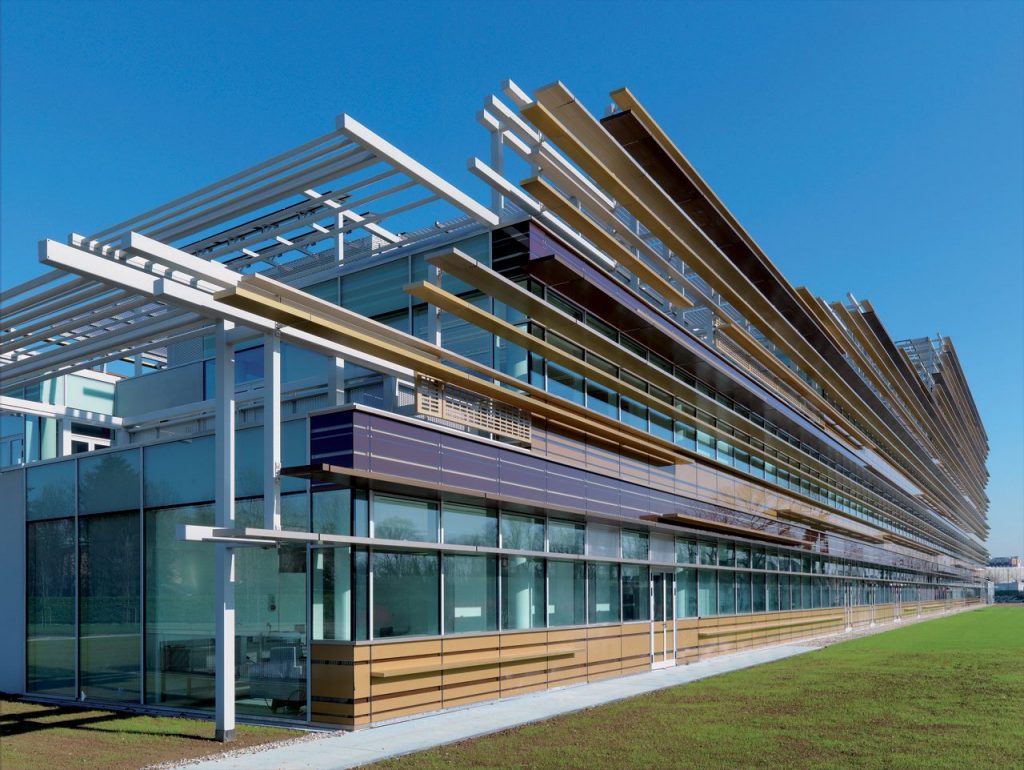
Worldwide, 40% of all primary energy is used in buildings. While in our countries this is mostly achieved with fossil fuels. In different ways, both patterns of energy consumption are environmentally intensive, contributing to global warming. Without proper policy interventions and technological improvements, these patterns are not expected to change in the near future. On the global level, knowledge regarding the energy use of building stocks is still lagging behind. Generally speaking, the residential sector accounts for the major part of the energy consumed in buildings; the energy consumption in non-residential buildings, such as offices and public buildings and hospitals, is also significant. The pattern of energy use in buildings is strongly related to the building type and the climate zone where it is located. The level of development also has an effect. Today, most of the energy consumption occurs during the building’s operational phase, for cooling, heating and lighting purposes, which urges building professionals to produce more energy-efficient buildings and renovate existing stocks according to modern sustainability criteria. The diversity of buildings, their distinct uses, and extended life cycle pose a challenge for the prescription of energy conservation measures. Specific solutions are needed for each situation, such as for the construction of new buildings, for the renovation of existing ones, for small family houses and for large commercial complexes. Energy consumption can be reduced with thermal insulation, high-performance windows, and solar shading, airtight structural details, variable speed cooling heat pump systems, supported with the integration of renewable energy production in the building. These strategies apply to buildings in both warm and cold climates. Site and energy chain planning also influence the energy efficiency of the individual building. However, technological solutions will only be helpful when building occupants are committed to using energy-efficient systems in an appropriate way. There are many factors that influence the energy consumption behavior of individuals, such as gender, age, and socio-demographic conditions. Educational and awareness raising campaigns are therefore crucial in the process of ensuring the energy efficiency of buildings. The end of the functional service life of a building may inhibit renovation projects – when the building or its parts are no longer suitable for the needs of the building user. In refurbishment processes, basically, the same rationale applies as in the construction of new buildings. Since the operational energy is the major cause of greenhouse gas emissions in residential or commercial buildings to be renovated, this should be the first aspect to be taken into account when considering the improvement of the energy efficiency of building stocks. Moving towards the idea of life-cycle responsibility and introducing effective commissioning processes will help to ensure the efficient life-cycle performance of the building. The high investment costs involved, the lack of information on energy-efficient solutions at all levels, as well as the (perceived or real) lack of availability of solutions to specific conditions, are considered as the major barriers to implementing energy efficiency measures in buildings. In addition, there can be a number of organizational barriers, such as different decision-making levels, privatization/deregulation processes, different stakeholders deciding on the energy system and shouldering the energy bill respectively, etc. It is clear that there are no universal solutions for improving the energy efficiency of buildings. General guidelines must be adjusted to the different climate, economic and social conditions in different countries. The local availability of materials, products, services and the local level of technological development must also be taken into account. The building sector has a considerable potential for positive change, to become more efficient in terms of resource use, less environmentally intensive and more profitable. Decision makers, stakeholders, and experts should understand the logic behind the behavior of building industry and that is important for successful development and deployment of proper technologies. Providing benchmarks on sustainable buildings is an essential requirement for decision makers to take the correct call of action to encourage energy efficient buildings. Solutions aiming to improve the energy efficiency of buildings and construction activities should be disseminated widely, making use of existing or new technology transfer programs. Influencing market mechanisms and encouraging research and development projects, as well as public-private partnerships, are of paramount importance for this endeavor. The energy efficiency opportunities in the construction process and in buildings are undertaken, including building materials, envelope design, energy supply, human behavior and site and energy chain planning. The focus will be put on the operational phase of the building and on solutions that have been demonstrated in full scales, such as pilot facilities or commercial applications. A movement on the land is powered by 365Ecology to create the first community in Egypt collecting all stakeholders and experts to discuss everything related to energy efficient buildings. The vision for the “Building of Tomorrow” is our motive to change the industry of the building construction and make a real impact that helps to renew the industry, make an improvement in the market, increase the awareness and enhance the worker’s experience.