Coronavirus disease (COVID-19) is an infectious disease caused by a newly discovered coronavirus. The best way to prevent and slow down transmission is being well informed about the COVID-19 virus, the disease it causes and how it spreads. According to the WHO (World Health Organization), “The COVID-19 virus spreads primarily through droplets of saliva or discharge from the nose when an infected person coughs or sneezes”. Talking and breathing can also release droplets and particles. Droplets generally fall to the ground or other surfaces in about 1m, while particles, behave more like a gas and can travel through the air for longer distances, where they can transmit to people and also settle on surfaces. The virus can be picked up by hands that touch contaminated surfaces (called fomite transmission) or be re-entrained into the air when disturbed on surfaces. However, other mechanisms of virus dissemination are likely to be more significant: direct person to person contact indirect contact through inanimate objects like doorknobs through the hands to mucous membranes such as those in the nose, mouth and eyes droplets and possibly particles spread between people in close proximity Figure 1: COVID-19 transmission routes For this reason, basic principles of social distancing (1 to 2m), surface cleaning and disinfection, handwashing and other strategies of good hygiene are far more important than anything related to the HVAC system. This is a “game” of chance, and the fewer individuals who come in close contact with each other, the lower the possibility for the disease to be spread. Since symptoms do not become apparent for days or weeks, each of us must behave as though we are infected. Practical recommendations for building services operation: For those building which remain open or will re-open in the next few weeks, there are some non-HVAC actions is required to be made: Increase disinfection of frequently touched surfaces. Install more hand sanitation dispensers, assuming they can be procured. Shut down food preparation and warming areas, including the office pantry or coffee station. Close or post warning signs at water fountains in favor of bottle filling stations and sinks, or even better, encourage employees to bring their water from home. Once these basics are covered, a few actions related to HVAC systems are suggested, in case some spread of the virus can be affected, according to the guidance published by ASHRAE (American Society for Heating, Ventilation & Air-conditioning Engineers) and REHVA (The Federation of European Heating, Ventilation & Air-conditioning Association), There are some suggested precautions that can be taken into consideration during building operating hours. These precautions include: Increase air supply and exhaust ventilation: For those buildings which use mechanical ventilation system, increase the outdoor fresh air to be supplied (air change per hour) to the building would be helpful, if the ventilation is to reach 24/7 is much better and demand control ventilation (DCV) should be disabled, in addition lowering the population inside the building will cause in effective dilution ventilation per person. Also during spring time in which there is a limited requirement of cooling needs indoors, ventilation system can operate with increased rate of air supply during the whole building work periods without facing the problem of high energy consumption. Exhaust ventilation systems of toilets should always be kept in duty on 24/7, and under-pressure must be insured, especially to avoid the faecal-oral transmission. Use more window-driven natural ventilation: For those buildings that don’t have installed mechanical ventilation systems, the use of openable windows is recommended, even if this causes thermal discomfort. Open windows in toilets with passive stack or mechanical exhaust systems may cause contaminated airflow from the toilet to other rooms so, in these circumstances, it is recommended that toilet windows remain shut. If there is no adequate exhaust ventilation from toilets, and window airflow cannot be avoided, keep windows open in other spaces to achieve crossflows through buildings. Figure 2: Natural ventilation through building windows Safe use of heat-recovery devices: Heat-recovery devices may carry over the virus attached to particles from the exhaust airside to the supply airside via leaks. In rotary heat exchangers (including enthalpy wheels) particles deposit on the return airside of the heat exchanger surface, after which they might be re-suspended when the heat exchanger turns to the supply airside. Based on current evidence, it is recommended to turn rotary heat exchangers off temporarily during these circumstances. Its document goes on to state: if leaks are suspected in the heat-recovery sections, pressure adjustment or bypassing can be an option to avoid a situation where higher pressure on the extract side causes air leakages to the supply side. Transmission via heat-recovery devices is not an issue when a HVAC system is equipped with a run-around coil or other heat-recovery device that guarantees air separation between return and supply side. No Use of Recirculation: Virus particles in return ducts can also re-enter a building when centralized air handling units are equipped with recirculation sectors. It is highly recommended to avoid central recirculation. In case this leads to problems with cooling or heating capacity, this has to be accepted because it is more important to prevent contamination and protect public health than to guarantee thermal comfort. Air Filtration: Filtration in building heating, ventilation, and air conditioning (HVAC) systems can be a part of an overall risk mitigation approach but is not generally regarded as a solution by itself. We do know that low-efficiency filters (less than MERV 8 according to ASHRAE Standard 52.2 or less than ePM2.5 20% according to ISO 16890-1:2016) are very unlikely to make a difference. Improve central air filtration to the MERV-1311 or the highest compatible with the filter rack, and seal edges of the filter to limit bypass. Use of UV Lamps: A properly designed and maintained UV system, often in concert with filtration, humidity control, and airflow management, has been shown to reduce infections from other viruses. However, the details of the system are very important. Simply adding UV to an existing system without consideration of
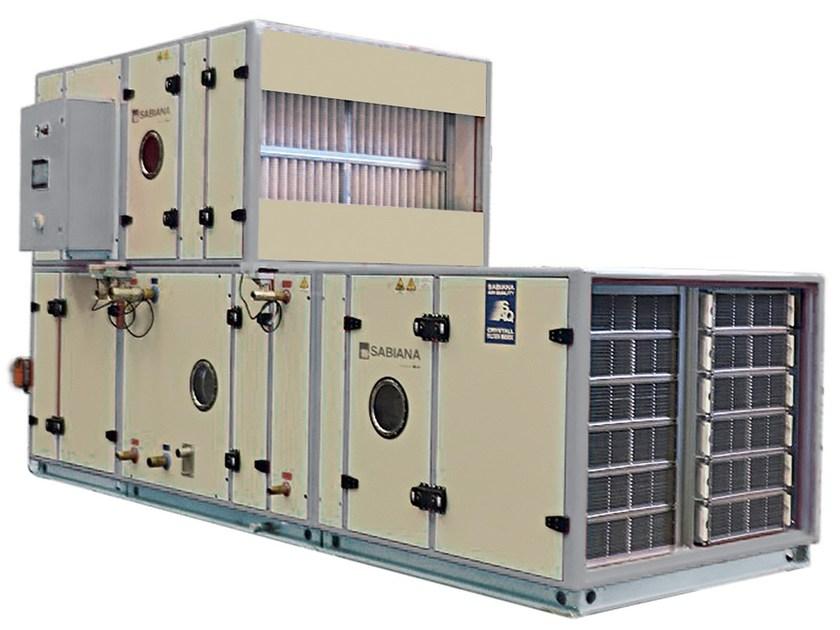
The coronavirus, officially known as COVID-19, has become a serious health concern across the globe. With a rising infection and mortality rate, people are taking steps to protect themselves from exposure in whatever way they can. The size of COVID-19 is approximately 0.125 microns, so it requires special type of air filtration to be trapped or eliminated in order to protect the indoor air from being contaminated by ventilators. HEPA filter (High Efficiency Particulate Air) is one of the most well-known filters used for air purification and contaminants removal. High Efficiency Particulate Air (HEPA) filters are the primary technology used for particulate removal in individual and collective protection applications. HEPA filters are commonly thought to be impenetrable, but in fact they are only 99.97% efficient at collecting the most-penetrating particles (approx. 0.3 micrometer) which means that it may trap the virus but it will not be eliminated or destroyed. Ultraviolet germicidal lamps can also be used in ventilator for the sake of eliminating bacterial and virus contamination from the supplied air. Broad-spectrum UV light kills viruses and bacteria, and it is currently used to decontaminate surgical equipment. it can also be used in units supplying air to public areas, that would be a safe and efficient method for limiting the transmission and spread of airborne microbial diseases. SABIANA Air handling units offer a wide range of air filters that would protect the indoor air from being contaminated and helps sufficiently with infection control process.
Data center industry is rapidly growing, with ever greater focus on faster connections and increasing uptime. Cloud data center traffic will grow every year, and the need for greater online storage will drive server capacities higher and higher. The worldwide energy consumption of data centers increased nearly 56 % between 2005 and 2010, and reached 237 terawatt hours (TWh) in 2010, accounting for about 1.3% of the world’s electricity usage [1]. Cooling systems (primarily air conditioners) in data centers account for a large part of this energy consumption: in 2009, about 40% of the energy consumed by data centers was for cooling purposes [2,3]. Cooling Equipment: A common cooling method for data centers is the use of computer room air-conditioners (CRAC), these units have several configurations: Aisle Coolers: which supply cold air to the IT equipment racks through a raised floor. The air flows across the IT equipment and then removes dissipated heat from the back of the rack. In order to avoid mixing hot and cold air, and thus reduce the cooling efficiency, the typical practice is to arrange alternating rack rows of “hot aisles” and “cold aisles.” Since hot air is lighter than cold air, the hot exhaust air from the IT equipment rises and recirculates into the CRAC, where it is cooled and supplied into the racks again. In-rack coolers: In-Rack is the most precise cooling available, as the rack and the air conditioner operate in a closed relationship with one another. Cold air has no choice but to pass through the servers; hot air has no choice but to pass through the heat exchanger. The airflow paths are small, requiring less fan energy. In addition, the exhaust air is captured at its hottest point, maximizing the temperature difference on the cooling coil. Highly Efficient Cooling Systems: Cooling systems consumes roughly 40 % of the overall energy consumption in data centers, so there are a lot of opportunities to reduce the power by using energy saving cooling systems. [4] Data centers usually have a tendency to overcool to prevent equipment downtime and maintain an operating environment of about 20 °C and 50 % RH. There are some “smart” or “adaptive” cooling solutions that allow for dynamic modification of the data center cooling air flow and temperature set points based on heat load monitoring throughout the data center. These methods save excess energy consumption due to overcooling and also prevent the formation of hot spots. [5][6] Free Air Cooling (FAC): Free air cooling (FAC) is one of the simple and most promising methods to reduce the energy consumption for cooling. FAC uses air outside data centers to cool equipment directly (under prescribed temperature and humidity levels). When the outside air is cooler than the return air, an airside economizer exhausts the hot return air and replaces it with cooler, filtered outside air, essentially “opening the windows” to cool the data center equipment. To solve the indoor air quality problem of the aforementioned system, heat exchangers can be added between the indoor and outdoor airs. Therein, rotating wheels are widely used. The following schematic gives the principle of rotating wheel heat exchangers where the wheel keeps rotating at a speed of 10-12 RPM and the airs flows into different paths to avoid mixing. Then the indoor air flows back to the data center for space cooling after heat exchange whereas the heated outdoor air is exhausted. So in order to guarantee a reliable refrigeration system, electrical cooling equipment is often integrated with the rotating wheel heat exchanger. FAC has been investigated by companies including Intel, Google, Microsoft, and Vodafone. Intel conducted a 10-month test to evaluate the impact of using only outside air via FAC to cool a high-density data center in New Mexico 2007. The center had 900 heavily utilized production servers. In this test, the system provided 100 % air exchange with a temperature variation in the supply air from 18 °C to more than 32 °C, no humidity control (4–90 % RH), and minimal air filtration. The results showed that about $2.87 million (a 67 % savings in total energy costs) was saved by the new cooling method. [7] Water Free Cooling (WFC): the main difference between water-based free cooling system and traditional air conditioning system is that a heat exchanger is installed in parallel with electrical chiller to make full use of free cooling capacities using cooling tower or underground water to exchange heat with the water used to cool the data center. In other words, according to climatic conditions (especially the wet bulb temperature), the whole system can work under three different modes: (a) when the outdoor temperature is low (winter), the cooling water can be used to produce chilled water directly through the heat exchanger and the chiller can be turned off, so that the system works under “free cooling” mode; (b) when the outdoor temperature is high (summer), the chiller is activated instead while the cooling tower is only used to handle the condensation heat, so that the system works under “electrical cooling” mode; (c) when the outdoor temperature is moderate (spring and fall), the chiller and heat exchanger work together in parallel, so the system works under “free cooling + electrical cooling” mode. Therefore, the working conditions of the water-based free cooling system are greatly impacted by the ambient temperature variation. [8] References: [1] J.G. Koomey, Growth in data center electricity use 2005 to 2010 (Analytics Press, Oakland, 2011). [2] A. Almoli, A. Thompson, N. Kapur, J. Summers, H. Thompson, G. Hannah, Computational fluid dynamic investigation of liquid rack cooling in data centres, Appl. Energy (2012). [3] P. Johnson, T. Marker, Data center energy efficiency product profile, Pitt & Sherry, Report to equipment energy efficiency committee (E3) of The Australian Government Department of the Environment, Water, Heritage and the Arts (2009). [4] A. Bar-Cohen, B.A. Srivastava, B. Shi, Thermo-Electrical Co-Design of 3D ICs: Challenges and Opportunities. Computational Thermal Science (2013). [5] A. Bar-Cohen, J.J. Maurer, J.G. Felbinger, Keynote Lecture, “DARPA’s
I still remember my first day after graduation when I joined Shaker consultancy group; which was ranked the first Mechanical, Electrical, Plumbing (MEP) consultant in Egypt in the year 2001. Their main office was in Mohandseen. At the time, Mohandseen was an upper-class district, most of its residents were the crème de la crème of the Egyptian society; it was the community of politicians, ministers, and artists. We created designs for Heating, Ventilation, and Air Conditioning systems (HVAC) for all the significant projects in Egypt near the Nile river, like The Four Seasons hotels and Nile City. One of the biggest projects I participated in was The American University in Cairo which is currently located in The Fifth Settlement district. In 2001, nobody lived in The Fifth Settlement, it was literally a desert, and in the time of 18 years, it turned into one of the most distinguished places in Cairo, to work, to study, and to live. In 2008, I worked for Dar Alhandasah in Dubai. Now, in 2018 Dubai is another city. Its buildings and towers tell us the story of “How to build a city from scratch.” Every building around the world tells its own story; however, I am always inspired by the stories of the technologies inside these buildings. I always dream of the buildings of tomorrow; their places, what they’re made of, and the story each building would tell the future generations. Four years ago, I decided to follow my passion and start my own business; a company that works on buildings’ technologies and solutions. Today I’m developing my business model to introduce an advanced version that could take this industry to its highest levels. I believe that that could be achieved through raising the standards of buildings’ technologies, being energy efficient and smarter than before. I am here today to lunch our new company Zuidas Technologies; an innovative integrated energy efficient solution to develop livable, energy efficient, and smart commercial buildings, and a turnkey solution provider from the basis of design till operation. Our core purpose is to create healthier working, living, and learning environments by using top-notch technologies. From this perspective, we extend our boundaries and keep innovating continuously to develop a new generation of buildings. With a group of experts and professionals, we are establishing a new baseline for energy efficient buildings, using a new project delivery methodology to save up to 50% of the energy normally consumed. Meeting the 50% energy savings goal is challenging, and according to the Advanced Energy Design Guides of Office Buildings written by the American Society of Heating, Refrigerating and Air-Conditioning Engineers, it requires essential principles: 1- Obtain building owner buy-in. There must be a strong buy-in from the owner and the operator’s leadership and staff. The more they know about and participate in the planning and design process, the better they will be able to achieve the 50% energy saving goal. The building owner must set his goals and provide the guidance required to turn his vision into a reality. 2- Assemble an experienced, innovative design team. Interest and experience in designing energy-efficient buildings, innovative thinking, and the ability to work together as a team is critical to meeting the 50% goal. The team achieves this goal by creating a building that maximizes daylighting; minimizes process, heating, and cooling loads; and has highly efficient lighting and HVAC systems. Energy goals should be communicated in the request for proposal and design team selection based in part on the team’s ability to meet the goals. The design team implements the goals for the owner. 3- Adopt an integrated design process. Cost-effective, energy-efficient design requires trade-offs among potential energy-saving features. This requires an integrated approach to building design. A highly efficient lighting system, for instance, may cost more than a conventional one, but because it produces less heat, the building’s cooling system can often be downsized. The greater the energy savings, the more complicated the trade-offs become and the more design team members must work together to determine the optimal mix of energy saving features. Because many options are available, the design team will have wide latitude in making energy-saving trade-offs. 4- Consider a daylighting consultant. Daylighting is an important energy savings strategy to achieve the 50% energy saving goal; however, it requires good technical daylighting design. If the design team does not have experience with a well-balanced daylighting design, it may need to add a daylighting consultant. 5- Consider energy modeling. This Guide provides a few design packages to help achieve energy savings of 50% without energy modeling, but whole-building energy modeling programs can provide more flexibility to evaluate the energy-efficient measures on an individual project. These simulation programs have learning curves of varying difficulty, but energy modeling for office design is highly encouraged and is considered necessary for achieving energy savings of 50%. Part of the key to energy savings is using the simulations to make envelope decisions first and then evaluating heating, cooling, and lighting systems. Developing HVAC load calculations is not energy modeling and is not a substitute for energy modeling. 6- Use building commissioning. Studies verify that building systems, no matter how carefully designed, are often improperly installed or set up and do not operate as efficiently as expected. The 50% goal can best be achieved through building commissioning (Cx), a systematic process of ensuring that all building systems—including envelope, lighting, and HVAC—perform as intended. 7- Train building users and operations staff. Staff training can be part of the building Cx process, but a plan must be in place to train staff for the life of the building to meet energy savings goals. The building’s designers and contractors normally are not responsible for the office after it becomes operational, so the building owner must establish a continuous training program that helps occupants and operation and maintenance staff maintain and operate the building for maximum energy efficiency. This training should include information about the impact of plug loads on energy use and the importance of using energy-efficient
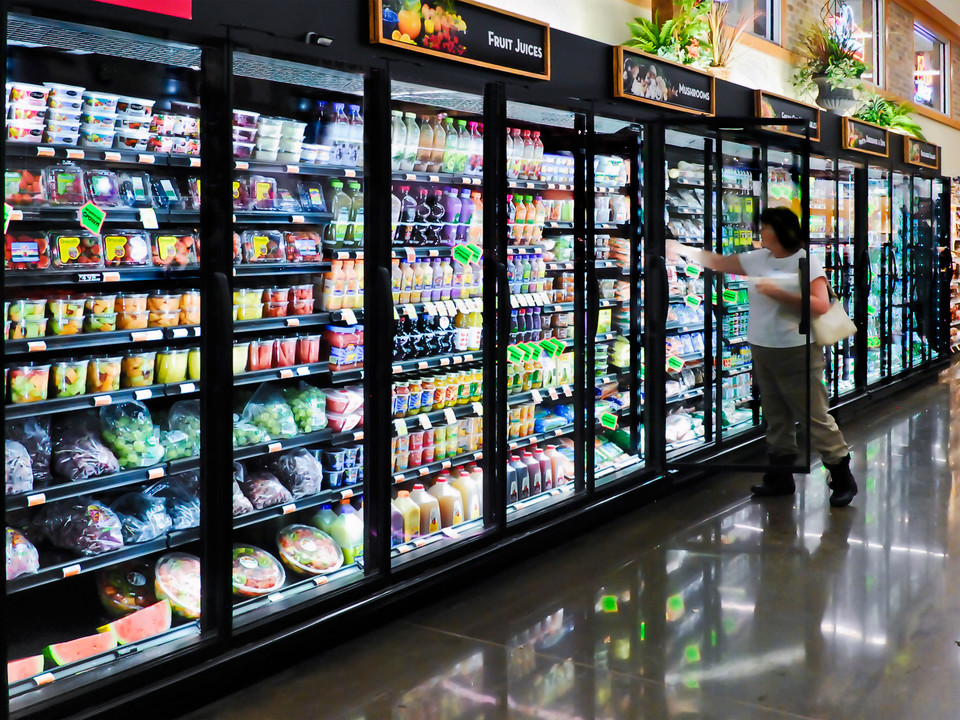
Over the last two decades, hypermarkets were introduced to the Egyptian market proving themselves to be the perfect one-stop shop to buy all your family’s needs, whether its groceries, home appliances, or even children toys. The secret to hypermarkets success in Egypt is down to one factor. Hypermarkets provide the lowest retail prices since they have the largest economies of scale. Meaning they can buy a product from a manufacturer directly in large volumes obtaining a low price per unit. The number of hypermarkets is increasing every year. Even commercially isolated regions like Upper Egypt are starting to join the trend. Last year, the first hypermarket was opened in Upper Egypt, Asyut. The project is funded by a Saudi Arabian investment group and its planning on opening a total of 15 branches all over Upper Egypt. Unfortunately, it hasn’t been all that great for hypermarkets. The devaluation of the Egyptian pound leads to a significant increase in prices of most products sold, meaning the purchasing power of their clients has decreased. This sudden change is affecting the total profits for hypermarket owners, and they are desperately looking for different ways to compensate for the losses. One limitation to hypermarkets is their huge size. They consume large amounts of energy for HVAC and lighting. In addition, the recent economic reforms lead to an increase in electricity and gas prices. As a result, new branches designs are taking into consideration energy efficiency, and owners are motivated to invest heavily in energy efficient equipment. Since HVAC consumes 70% of commercial buildings’ energy consumption, it has become a priority for energy savings. Let’s look at a study done by 365 Ecology on Hypermarket branch in the North Coast . This study compares how VRF will perform compared to the package system which is currently used by other branches. it has a 1400 m2 ground floor for sales, and a 420 m2 basement for administrative purposes. The following graph estimates the total running + initial costs of using LG Multi V vs a traditional package system. It is clear VRF will save millions of pounds over the lifecycle of the project. The amount of money saved could allow Hypermarket series to limit the increase of their products prices, this way they remain ahead of their competition and they don’t lose their clients purchasing power. One of 365 Ecology’s current clients is Hyper Market. the market is a Saudi based grocery retail company specialized in supermarkets and hypermarkets. it is founded Saudi Arabia’s first ever hypermarket in 1978 in Riyadh. They own 470 stores in Saudi Arabia and UAE and recently decided to expand in Egypt as part of their regional dominance strategy. The first Egyptian branch was opened in 2015 in 6th October. The second branch was opened in the Fifth Settlement as a two-floored store in a tower. The store’s estimated power consumption expenses were LE 600,000 per month. the engineering management contacted 365 Ecology asking for a solution to reduce power consumption. 365 Ecology studied the HVAC system in use and recommended switching to LG Multi V VRF to reduce the store’s total energy consumption by 30% and HVAC consumption by 50%. the consultants reviewed and approved of the final design, and the project is currently under construction. VRF is the most energy efficient HVAC system for hypermarkets since their cooling capacities fall under the VRF range, which studies show to be from 40 – 500 RT. Also, hypermarkets require individual cooling zones, as they sell a variety of products that require different temperatures and humidity levels. For example, the dairy products section requires a lower temperature zone than the bakery section. Besides, hypermarkets have large open areas that may require AHUs to cover the large airflow rate, and VRF is compatible and operates optimally with AHUs. It is only a matter of time before hypermarkets engineering management discovers the importance of switching to VRF. The initial signs are already set in motion, and as commodity and electricity prices keep increasing, owners will make the switch faster than ever.
Over the past few years, telecommunications have emerged as one of the largest industries in the Egyptian economy. The “Digital in 2017” study stated, “when it comes to Mobile penetration Egypt comes at rank 24 internationally with a 103% penetration.” Another study by Statista (see below) estimates the projected number of smart phone users in 2018 and 2019 based on historical data from the previous five years. What we conclude from the previously mentioned studies is that the rise in telecommunication studies will have a direct impact on the commercial buildings industry. With the emergence of a fourth mobile operator, WE, the competition has reached fierce levels, and for each company to stay at the top, they must all be equipped with the infrastructure required for the level of competition. Infrastructure for telecommunications means opening regional headquarters all over Egypt to efficiently manage the operations of all governorates and cities. Also, telecom companies differentiate themselves by stating they have superior customer service, hence as the number of users increases, customer service offices will increase. Finally, retail stores selling prepaid cards, postpaid contracts, and mobile phones are also on the rise to maximize revenues, and this includes phone manufacturers as well. All these implications lead to one conclusion, each telecom company will own hundreds of operating buildings all over the country. This means the total monthly electricity bills for these companies will be massive. With the competition very close, telecom companies are trying to save expenses as much as possible. This dilemma is leading their management to invest heavily in electricity cost saving projects wherever it is possible. Since HVAC consumes almost 70% of commercial buildings energy consumption, it has become a priority for energy savings by telecom companies. They are realizing that VRF is the perfect match for their HVAC problems. Most telecom offices are midsize offices that fall under the VRF cooling capacity territory, and they are starting to realize the importance of energy efficiency. In 2017, Vodafone’s office in Smart Village hired many employees without expanding the office space. The cooling capacity required for the office had increased after the arrival of the new employees. The existing HVAC system was Water Chiller but it did not meet the new capacity. Vodafone was looking for a system flexible enough to install along with the existing system and to be energy efficient. VRF was the perfect solution, its piping length and small size allow it to be installed along with most existing systems. In addition, it is the most efficient system for this case since the required capacity was 42 tonnes. Vodafone’s HVAC contractor, EGYPRO, recommended 365 Ecology to supply and install LG’s Multi V system for the project. Another addition to the VRF trend is Orange. In 2017, Orange started discussing possible HVAC solutions for their new Upper Egypt regional headquarters building in Asyut. Besides considering the DX-split system, Orange considered for the first time using VRF. After one year of studies and consultation with Dr. Momen Afifi, Orange decided to use VRF for two reasons. They found VRF to be the cheaper option (payback period of 3 years) because of its low operating costs. Also, the building exterior does not allow outdoor units, so VRF’s installation flexibility provided the solution to this problem by having the outdoor unit placed in a room connected to the exterior of the building. Since Orange was determined to execute the project as fast as possible they decided to hire 365 Ecology to be the VRF contractor. 365 Ecology provided the fastest delivery time having available stock to cover the whole project, as well as the required experience for installation. All system parts were delivered to the site one week from signing the contract, and the installations were completed in one month. A new branch of the Raya Contact Centre is to be opened in 2018 in Palm Strip mall. The contact center is an outsourcing hub for foreign companies providing customer services and sales management. Raya decided to use VRF for the new branch, but unfortunately, they needed to finalize the project in a maximum of one month. Since all the parts required for the VRF system are imported, Raya found difficulty finding stock ready for delivery to meet the desired capacity. 365 Ecology contacted Raya and explained how we have in stock all the required parts. Raya was impressed and the contract was signed. Two days later, all the system parts were delivered to Raya’s site. The PO made for this project was the fastest in Raya’s history. Less than a month later the VRF system was installed and ready for operation. It is obvious, VRF is the future of telecom companies, whether it’s a call center, retail store, or an administrative office. At 365 Ecology, we are fully aware of the direction this market is heading to, and we are taking the initiative to be ahead of our competition.
Building owners are facing a huge dilemma when it comes to choose the best fit HVAC system for their property. The selection of the HVAC system depends on many variables including building size, working activity, interior layout, hours of operation, and most importantly the owner’s budget. The last variable is the most interesting one. For many building owners, the initial cost of the system is the most decisive factor, regardless of operations cost and lifecycle analysis of the system. This method of thinking is short-sighted and outdated. A major shift in the mentality of building owners is required for the Egyptian market to optimize energy consumption and save millions of EGPs every year on electricity bills. At 365 Ecology, our main objective is to provide the most economical and energy efficient HVAC solutions for our clients, thus for every project we work on, we must conduct a life cycle analysis, and calculate the cost savings for our client over the period of operation. Let’s look at one of our clients, Faisal Islamic Bank (FIB). FIB is one of our most loyal clients as we have completed together over 5 projects in the last three years. FIB operates 36 branches in Egypt and opens a few new every year. One of their main concerns is their electricity bill. With HVAC covering 70% of commercial buildings consumption, they have great desire to install the most efficient HVAC systems for their branches. We recommend using LG Multi V VRF for mid-size commercial buildings based on the cooling capacities of such buildings, the long hours of operation, and the necessary individualized cooling experience. Compared to its competitors, the VRF is the most efficient system in this range. We created a comparison study for FIB Zizenya branch and concluded that VRF would save 30 – 50 % of HVAC energy consumption compared to their initial chosen system, DX packaged. FIB was interested, and they found the analysis to be convincing, but without previous experience with VRF, they had their doubts, just like trying anything for the first time, whether it’s trying a new dish, watching a new series, or buying groceries from a new grocery shop. FIB decided on experimenting with LG VRF. They installed a DX-packaged system on one floor, and an LG VRF system on another. Both floors have similar layouts and occupancy, so they are assumed to have identical cooling conditions. 365 Ecology installed PDI (power distribution indicator) to track and monitor the power usage of both systems, compare the results and determine which system is more efficient. The results hugely favored VRF. The following graph summarizes the cost savings from using VRF compared to the DX packaged. With the current economic reformations currently taking place in Egypt, energy efficiency is more important than ever. The government is gradually removing subsidies on utilities like gas and electricity, and rates have reached unprecedented levels. With companies still trying to cope with increased expenditures due to currency floatation, further increases in electricity might be the last straw. It is time for owners to seek alternative solutions and consultations on how to reduce energy consumption. To continue using the same traditional systems as before just because of familiarity, or choosing systems based on the lowest initial cost, it is no longer acceptable with the current economic conditions. It is time to choose based on scientific methods, life cycle studies, and expert consultation.
By: Michael BuehlerHead of Infrastructure & Urban Development, World Economic Forum Philipp GerbertSenior Partner & Managing Director, The Boston Consulting Group “Traffic is driving me nuts. Am going to build a tunnel boring machine and just start digging …” Elon Musk’s tweet in December 2016 startled the construction industry. He was not joking: only a month later, he started excavating the first test trench on Space X headquarters in Los Angeles – an incredibly fast move for such a traditionally slow sector. Thanks to Musk’s visionary and bold approach, he succeeds in attracting the best talent to his projects – a challenge traditional construction companies find hard to meet. This is just one prominent example of a growing number of innovators and disruptive companies shaking up the industry. With 3D-printed houses, automatically designed hospitals, prefabricated skyscrapers – once futuristic dreams are now becoming a reality, according to a new report by the World Economic Forum and Boston Consulting Group. Building the future Relative to other industries, productivity in construction has stalled over the past 50 years. The technology was not making any fundamental advances, and companies remained averse to changing their traditional methods. Recently, however, transformative technological developments have emerged, and some pioneering firms have adopted them for current projects. These developments – 3D printing, building information modeling, wireless sensing and autonomous equipment, to name just a few – are already starting to turn traditional business models upside down. The Shaping the Future of Construction report outlines 10 cases that illustrate the value of embracing innovation. Prominent flagship projects, such as Dubai’s Burj Khalifa, the world’s tallest building, and the Edge in Amsterdam, the world’s most sustainable office building, showcase state-of-the-art innovation. So, too, do the various pilot projects or start-ups that the report analyses, such as the 3D printing of houses by Chinese company Winsun or the predictive analytics of construction data by Chicago-based Uptake, Forbes’s hottest start-up of 2015 and now valued at over $2 billion. Jointly, their inspirational stories give a glimpse of the industry’s future. For society, it could be a bright future: construction clients and communities at large will benefit from the long overdue transformation of the industry. And change is urgently needed if we’re going to respond to megatrends such as climate change, migration into urban areas and a new global push for infrastructure. As a reliable source of entry-level jobs for immigrants and as a provider of affordable housing, the construction industry is sure to be at the center of public debate. And if public budgets tighten further, the industry’s cost-effectiveness will come under even sharper scrutiny. Incremental change is not an option; innovations in construction could help make a serious difference, both economically and environmentally. How construction companies can keep up So the pace of innovation is accelerating, and that’s a good thing. But companies must act swiftly to keep up and reap the full benefits of these new technologies. Or, to paraphrase sci-fi writer William Gibson, the future of construction is here now – it’s just not evenly distributed. Innovative companies and projects may demonstrate the art of the possible, but what impact will they have on traditional construction? According to the Shaping the Future of Construction report, there’s a widening gap between the innovation laggards and leaders, in particular with regards to their digital transformation. So how can companies stimulate innovative ideas, turn them into reality and ultimately succeed in the market? The report offers a few examples from pioneering firms, with lessons such as: create an innovation-friendly culture that rewards risk-taking; take a longer-term product perspective, rather than thinking in terms of individual projects; and proactively shape the regulatory environment. Companies have nothing to gain from delaying. Once they start improving, the benefits – lower costs, shorter delivery times and reduced environmental impact – can begin to accumulate. But it’s not up to companies alone. Governments are crucial in the transformation of the construction industry. They need to make it easier for regulators, strategic incubators, and project owners to adopt new technologies. The report recommends that governments should update building codes, move to forward-looking, performance-based standards, and introduce more flexible procurement models in infrastructure projects to overcome typical hurdles for innovation. In fact, infrastructure is again high on the agenda in almost all regions of the world. In the words of John Beck, president, and CEO of Canada’s Aecon Construction Group: “There has always been a mismatch between the need for infrastructure assets and the capital to fund them. By leveraging all the remarkable innovations that have emerged in recent years, we have a new opportunity to narrow that gap.”Source: WEF
3D-printed houses, automatically designed hospitals, prefabricated skyscrapers — once futuristic dreams are now a reality as described in the new report Shaping the Future of Construction: Inspiring innovators redefine the industry developed with the World Economic Forum It showcases and analyses 10 Lighthouse innovation cases – prominent flagship projects as well as start-ups and pilot projects – that demonstrate the potential of innovation in construction and give a glimpse of the industry’s future. In the context of the Forum’s Future of Construction initiative, over the past year six Working Groups comprised of industry leaders, academics and experts met regularly to develop and analyse innovative ideas, their impact, the barriers to implementing solutions and the way forward to overcoming obstacles and implementing modern approaches in the construction and engineering industry. This white paper presents the outcome of this work in the form of insight articles proposing innovative solutions on how to address the construction sector’s key challenges in the following fundamental challenge areas: 1. Project Delivery – Creating certainty of timely delivery and to budget, and generally improving the productivity of the construction sector 2. Life cycle Performance – Reducing the life cycle costs of assets and designing for re-use 3. Sustainability – Achieving carbon-neutral assets and reducing waste in the course of construction 4. Affordability – Creating high-quality, affordable infrastructure and housing 5. Disaster Resilience – Making infrastructure and buildings resilient to climate change and natural disasters 6. Flexibility, Liveability, and Well-being – Creating infrastructure and buildings that improve the well-being of end-users Together with these publications, the lighthouse innovation cases and the insight articles will be posted to the Future of Construction website to enhance awareness and collaboration among the extended stakeholders of our industry.
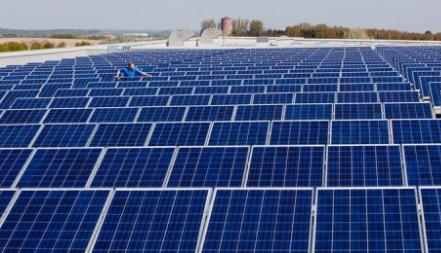
On-grid solar power system A grid connected PV system, which uses PV modules to convert the sunshine into electricity and feeds power into the grid via grid connected inverters without battery storage during the process. The inverter changes the DC electricity generated by solar modules into pure sine wave current which has the same frequency and phases with the grid, the generated power will be sent to the grid. the grid it self may absorb a huge amount of energy, and there will be no need for storage batteries, thus saves the system investment and reduces maintenance cost. Egypt has witnessed a massive progress and development in the renewable energy field, regarding incentives, laws, and regulations. According to the new Feed-In-Tariff regulation number 1947 for the year 2014, producers of Energy from PV systems get paid for the number of KWH supplied to the Grid via the new special meter. The tariffs for electricity produced from solar energy plants are summarized as the following: 1- Households: EGP 0.848 for each kilowatt (kW) per hour 2- Commercial producers of under 200 kW: EGP 0.901 for each kilowatt (kW) per hour (Low voltage connection) 3- Commercial producers of 200 – 500 kW: EGP 0.973 for each kilowatt (kW) per hour (Low Voltage connection 380 V) 4- Commercial producers of 500 KW – 20 Megawatts (MW): 13.6 cents per kilowatt per hour (Medium voltage connection) 5- Commercial producers of 20 – 50 MW: 14.34 cents per kilowatt per hour (High voltage connection) 5- Commercial producers of 20 – 50 MW: 14.34 cents per kilowatt per hour (High voltage connection) Using PV-Solar plant Potential In this part, we will briefly present the potential of the 100 KWp On Grid PV project and its profits. Total Area will be 1000 m2 of a flat surface roof. The next figure describes the grid connection schematic. Yearly energy yield The following graphs show the global solar radiation for the factory’s location (calculated using SMA Sunny design software), this will help in our calculation for the ROI. The graph is also showing the temperature ranges to be able to calculate an accurate value for the energy yield. The total Energy yield is found to be 200 MWh yearly. The plant would cost nearly $143,000 inclusive of system components including PV panels, Inventers, DC cables & mounting systems and installation.Annual sales revenue would be LE 180,200. This translates to a 7% ROI.