
Ecologi

Blog Posts

The Rule of 20

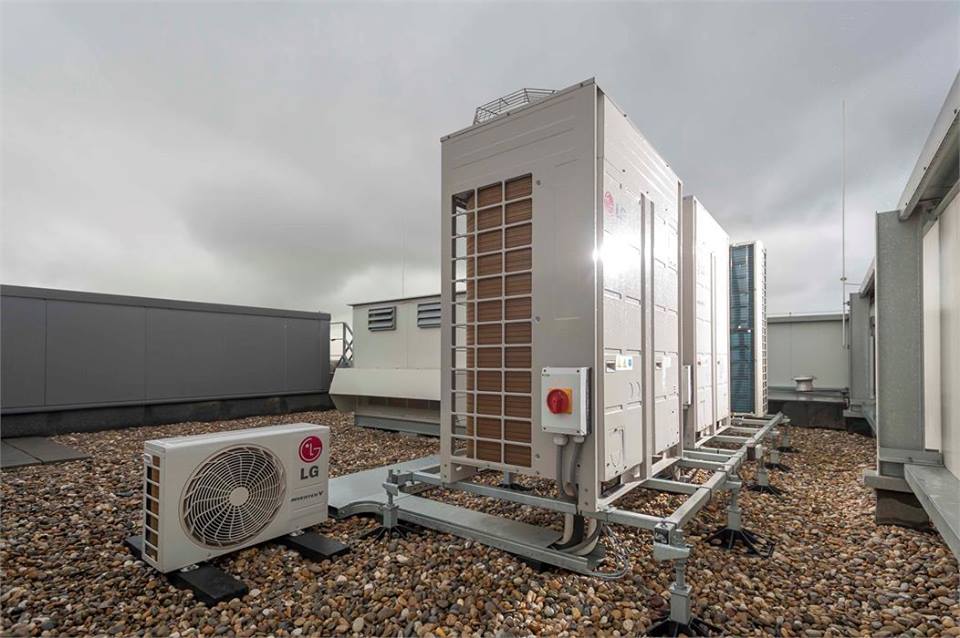
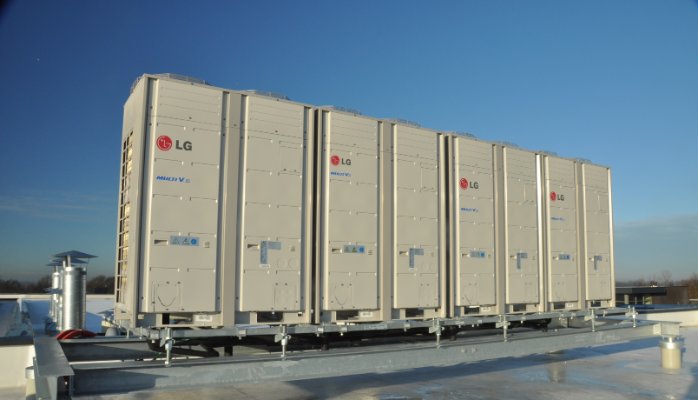
In 2008, the EU announced its triple goal related to energy efficiency under the ‘20-20-20 Policy’. With a wide range of far-reaching policies, the EU aims to cut its dependence on primary energy sources by 20%, reduce CO2 emissions by 20%, and also increase renewable energy production by 20% before 2020 To help lower electricity consumption by raising consumer awareness, all appliances released in the European market must display a label, which indicates the energy efficiency rating, annual energy consumption, and other energy-related information. In addition to helping consumers choose more efficient products, the labeling system encourages manufacturers to develop technologies, which require less energy to operate. Evolution of the TechnologyVRF systems are enhanced versions of ductless multi-split systems, permitting more indoor units to be connected to each outdoor unit and providing additional features such as simultaneous heating and cooling and heat recovery. VRF heat pump systems permit heating in all of the indoor units, or cooling of the all the units, not simultaneous heating and cooling. Heat recovery systems provide simultaneous heating and cooling as well as heat recovery to reduce energy use during the heating season. Over the past 15 years the technology has advanced in a number of areas: • Standard compressors to variable speed and capacity modulated scroll compressors • Direct driven outdoor fans to variable frequency drive, inverter-driven fans • Direct driven indoor coil motors to direct current or ECM-type motors • Variable capacity indoor units • Better heat exchanger surfaces with multi-segmented coils • Improved controls and diagnostics • R-22 to R-410A • Better refrigerant charge and oil management Advantages of VRF Some of the features of VRF systems should provide energy savings. These include: • Good part load performance due to multiple compressors and variable speed compressor systems permitting capacity modulation to serve 7% to 100% of the cooling or heating load. Many hours of HVAC system operation are spent between 30% and 70% of maximum capacity where the VRF system efficiency is high (Roth 2002). • Good zone control, saving by not conditioning unoccupied zones and by providing the capability to condition single zones off hours at a reasonable cost. Figure 3 shows how VRF systems can provide zone control, including simultaneous heating and cooling. Heat recovery is readily accomplished with the refrigerant when some of the indoor units are heating and some of the units are cooling. According to one manufacturer’s published data, if a 50% demand for full cooling and a 50% demand for full heating exist, in the heat recovery mode the compressor would only be 48% loaded. • Duct losses are confined to the ventilation air which is normally about 1/5th of the air flow of a ducted system circulating and conditioning both the ventilation air and the recirculated air. (Since ducts are often in unconditioned spaces, duct losses may not contribute to building space conditioning). • The refrigerant is used directly as both the working fluid and the heat transfer fluid tending to make the VRF system more efficient than systems that use air or water as a secondary heat transfer fluid for delivering heating or cooling. • The use of R-410Aand other features such a variable speed compressors, multiple speed fans and blowers, refrigerant circuitry, electronic expansion valves and advanced controls contributes to enhanced low-temperature performance • Better comfort. Since the system can be modulated to follow the load, units can remain running to maintain the temperature within narrow limits, assuring a comfortable temperature envelope. • Low noise levels. Levels are 24 dBA for the indoor unit and 56 dBA for the outdoor unit. • Flexible and quick installation. Only a small (3” or so) opening is needed for the refrigerant piping. • Low-profile, low space requirements and light weight make units easier to fit into tight spaces and to avoid obtrusive terminal units that could spoil the aesthetics of a space. • Modularity allows easy apportioning of energy costs among tenants or operations. Increased useful building space is enabled by reducing floor to floor height (12” ceiling void vs. 20”) and eliminating the need for a machine room. • Avoids the need for an on-site, trained operator as might be desirable with a large chiller based system

The Rule of 20 Read More »

وسائط التبريد الجديدة وتأثيرها على الطاقة

وظيفة وسائط التبريد في دوائر التبريد والتكييف وسائط التبريد هي المادة التي تستخدم كناقل للحرارة داخل دائرة التبريد, حيث تحدث عملية التبريد نتيجة التغيير الذي يحدث في خواص تلك المادة نتيجة تغييرات الضغط ودرجة الحرارة في دائرة التبريد فيقوم وسيط التبريد بطرد الحرارة من الدائرة عند المكثف لتتحول من الحالة الغازية الى الحالة السائلة عند ضغط ودرجة حرارة تعادل او اعلى بقليل من الوسط المحيط ..ثم بعد ذلك تقوم باامتصاص الحرارة داخل المبخر لتتحول من الحالة السائلة الى الحالة الغازية او البخارية مرة اخرى ولكن عند ضغط ودرجة حرارة منخفضة جدا وبذلك تحدث عملية التبريد والرسومات بالاسفل توضح مكونات دائرة التبريد وتمثيلها على منحنى الضغط والحجم -:في البداية نود ان نوضح نبذه مختصرة عن الانواع المختلفة لوسائط التبريد المستخدمة في انظمة التبريد وتكييف الهواء وبدائلها الحاليه وهي كالتالي  غاز النشادر (الامونيا) : وهو يعتبر اول غاز تم اكتشافه كوسيط تبريد في انظمة التبريد والتكييف الانضغاطية والامتصاصية الى ان اكتشفت شركة جنرال الكتريك بعد ذلك عائلة الفريونات  R 11 : يستخدم فريون (CF CL3) 11- مع ضواغط الطرد المركزى، نظراً لأنخفاض ضغطه الفعال ولكبر أزاحة الضاغط المطلوبة، ولتكييف هواء المصانع، المخازن والمسارح لأن درجة غليانه عند الضغط الجوى 23.7°م R 12 : يستخدم فريون (CF2 CL2) 12- كمائع تبريد مفضل لأمانه وخواصه الممتازة ومنها عدم إذابته للزيوت. درجة غليان فريون – 12 عند الضغط الجوى هى – 29.8°م لذا يستخدم فريون – 12 للحصول على درجات الحرارة المتوسطة فى الثلاجات المنزلية والتجارية R 22 : خواص فريون (CHF2 CL) 22- أحسن من خواص فريون – 12، درجة حرارة غليانه عند الضغط الجوى – 40.8°م وحجمه النوعى أقل من نظيره لفريون – 12 عند درجات الحرارة المنخفضة، لذا يستخدم فريون – 22 حالياً بدلا من فريون – 12 (للمبردات العميقة)، وللأغراض الصناعية ولمخازن التبريد للحصول على درجات حرارة منخفضة والفريون – R22 يذوب فى الزيت عند درجة حرارة التكثيف وينفصل عن الزيت عند درجة حرارة التبخير, ويفضل استخدام فريون – 22 بدلا من فريون – 12 لأن سعته التبريدية أكبر بنسبة 60% لنفس الضاغط وفيما يلي صورة توضح الاشكال الشائعه لاسطوانات الفريون المختلفة المستخدمة في عمليات التبريد وتكييف الهواء أكتشف عام 1974 وجود خفض فى نسبه غاز الأوزون الموجود بطبقه الاورون يسمح بنفاذ الأشعة فوق البنفسيجية. وتبين عام 1985 أن سبب الثقب أنبعاث موائع التبريد الكلوروفلوروكربون (CFC). وانتشارها لأعلى نحو طبقات الغلاف الجوى العليا ولاعتبارات بيئية تم توقيع بروتوكول مونتريال عام 1987 والذى ينص على خفض انتاج (CFC) وتوقفه عام 2000 بعد استحداث موائع بديلة غير مؤثرة على طبقة الأوزون وقد تم تأكيد توقيع بروتوكول مونتريال فى لندن عام 1990 وأتفق على تداول الموائع (CFC) فى الدول النامية حتى عام 2010 الى ان يتم التخلص منها نهائيا عام 2020   والصورة بالاسفل توضح نسبة تاثيرات غازات التبريد المختلفة على طبقة الاوزون والنتائج المتوقعه بعد اتفاقية مونتريال : وفيما يلي البدائل الشائعه لوسائط التبريد الجديدة وهي كالتالي R 134 A : يستخدم فريون 134A كبديل آمن لفريون R12 في الثلاجات المنزلية ومبردات المياة ومكيف السيارة ويعتبر صديق للبيئة نظرا لعدم تأثيره في طبقة الاوزون حيث انه لا يتفاعل مع الاوزون لعدم احتوائة على الكلور R 410 A  : وهو ما يهمنا في هذا الموضوع لانه الغاز المستخدم كبديل لغاز R22  وهو يستخدم في وحدات التكييف التي تعمل بنظام VRF  والتي لها قدرة عالية على توفير الطاقة في المباني الاعلى كفاءة تم اكتشاف R 410 A عام 1991 ثم تم تطويرة من قبل شركة Honeywell  ورمزة الكميائي CFC  (Hydroflurocarbon) وهو خليط من وسيط التبريد R32 مع وسيط تبريد R125  بنسبة 50%  الخصاص التي يتميز بها R410A  عن R22 يعمل بكفاءة اعلى حيث ان قدرته على امتصاص وطرد الحرارة اعلى من R22 . يساعد على تبريد اكثر للضواغط المستخدمة معه ويحد من خطر ارتفاع درجة حرارة الضواغط. يعمل بضغوط اعلى من R22 لذلك يتم استخدام ضواغط ذات متانه عاليه لتقليل الحد من فرص التكسير. يتم استخدام زيوت اكثر لزوجه مع الضواغط المستخدمة معه مما يجعله يعمل بشكل اكثر كفاءة. مع منع R22 من الاسواق ستكون اسعارة عالية بالمقارنة مع R410A    كفائته اعلى في توفير الطاقه المستهلكه وافضل بكثير للبيئة.  يساعد على اعطاء فترات ضمان اكبر للوحدات التي يستخدم بها لكفاته العالية في التشغيل وتفصيلاً، أفاد نائب الرئيس والمدير الإقليمي لدى جمعية المهندسين الأميركية (ASHRE)، الدكتور أحمد علاء الدين، بأن «الغازات المستخدمة في أجهزة التكييف، تستهلك طاقة كهربائية أكثر من الظروف التقليدية بنحو 30%، كونها غير مطابقة للمعايير البيئية والتي تتناسب مع الارتفاع في درجات الحرارة خلال الصيف  وكما نرى   R410A يحتوي على مزايا كبيرة جدا بالمقارنة بوسائط التبريد الاخرى ومما يتماشى مع التوجه العالمي لاستخدام اجهزة اعلى كفائة واقل استهلاكا للطاقة ومحافظة على البيئة

وسائط التبريد الجديدة وتأثيرها على الطاقة Read More »

Steer the customers to the right position

When it comes to selling variable refrigerant flow (VRF) technology, one of the first things contractors need to do is determine when and where the technology should be applied. After determining VRF is the best fit for a project, the key is to talk about efficiency up front. “It’s perhaps the most efficient air-cooled system. You also want to talk about ease of installation, a reduction in install time, and labor savings. We typically start the conversation with a discussion on how efficient these systems are and how much money they can save over the course of time on electric bills.” However, sometimes clients don’t leave contractors much of a choice when it comes to determining when to use certain equipment. “If the client is already convinced to go down the route of VRF or chillers, for example, we wouldn’t necessarily try to dissuade him from one course or the other unless we were clear the option he has chosen was not the right one for his building, “Customers rely on you to steer them in the right direction. As with any other profession, chances are great the consumer doesn’t know anything about the product or new technology unless you bring it up, most are not familiar with the technology, although it is becoming more popular. If you have the patience and take the time to explain what the technology has to offer, it makes the sell much, much easier. you must keep the old theory in mind that people buy from people they like. Many times, personality comes into play over technical knowledge.”Communicating Benefits From the consumer’s point of view, perhaps the most important benefit of VRF is its energy-efficiency savings potential. However, there are numerous advantages of which consumers may not be aware. “To start with, a VRF system does not put all the eggs in the same basket in the way a central chiller can,” Areas can be zoned; system distribution can be vertical through the building or horizontal, depending upon its orientation and usage; and the EER of properly designed and operated VRF systems are invariably better than a chiller system of the same capacity — particularly as far as low load performance is concerned. Plus, there is the ease of installation. There is little to go wrong as there are no pumps, dry air coolers/cooling towers, air handling units, etc., and, in the event of a unit failing, it can be taken out of circuit while repairs are carried out and the rest of the system can continue to function. If a large chiller fails, then the entire system, or a large part of it, is usually out of action.” Three major advantages, including energy efficiency, when selling VRF to clients. “Between the high SEER energy ratings and the possibility to spot-cool by turning off several areas when they’re not occupied, the monthly operation cost savings speak for themselves. Secondly, if it’s a high-occupancy area, what better application can address different peoples’ comfort levels than VRF One room could be 68F, while another space may be 78F, and, if we introduce heat recovery, we can offer simultaneous heating and cooling applications with certain brands.” VRF eliminates the need to employ separate controls contractors in commercial applications, said Ledsinger. “VRF is the closest to plug-and-play as possible,” he said. “With other commercial HVAC systems, you usually have to hire a separate controls contractor or separate controls provider, someone separate from the equipment provider. With VRF, the controls come with the equipment and, as long as you wire it in right, it all works, and you don’t need a separate controls contractor or provider. We use that one [selling point] a lot. The larger the job, the more money you save.” Addressing Cost Concerns VRF applications typically feature high initial costs, which may cause some clients to hesitate when considering the purchase. “Installation cost and time plus the efficiency, as described above, can easily overcome the higher initial cost. Plus, lower maintenance bills will be coming in the future. The best solution to overcoming cost concerns is for contractors to learn how to properly estimate a job. “In the past, before contractors were familiar with VRF, they would add a lot of fudge factor into their pricing because they didn’t know quite how to do it,” “Now that they’re familiar with it, we have contractors that can price it accordingly, and it’s very competitive with other commercial HVAC technologies. Usually, on an overall HVAC contract basis, VRF projects come in very competitively priced. “When VRF is compared to other technologies on an equipment basis, just equipment versus equipment, it’s usually going to come in higher because there are more components and they are a little bit more advanced electronically,” But, then you start factoring in labor savings, the savings on controls, and other savings. If you just look at equipment versus equipment, they may go into sticker shock, but the contract itself to put HVAC. in the building might be less for VRF. You must also take into account architectural savings because VRF takes up less space, structural savingsbecause VRF weighs less on the roof than most of its counterparts, and electrical installation savings because VRF indoor components don’t draw very much energy, so your panels can be smaller, disconnects and fuses are all smaller, and the wiring is smaller. All of that adds up to a lower upfront cost than most competitive technologies. Looking down the road, past initial costs, the energy savings are substantial.”

Steer the customers to the right position Read More »

VRF systems and retrofitting historical buildings

Variable refrigerant flow (VRF) systems, which were introduced in Japan more than 20 years ago, have become popular in many countries, yet they are relatively unknown in the United States. The technology has gradually expanded its market presence, reaching European markets in 1987, and steadily gaining market share throughout the world. In Japan, VRF systems are used in approximately 50% of medium-sized commercial buildings (up to 70,000 ft2 [6500 m2]) and one-third of large commercial buildings (more than 70,000 ft2 [6500 m2]) What is VRF? Many HVAC professionals are familiar with ductless mini-split products. A variation of this product, often referred to as a multi-split, includes multiple indoor evaporators connected to a single condensing unit. Ductless products are fundamentally different from ducted systems in that heat is transferred to or from the space directly by circulating refrigerant to evaporators located near or within the conditioned space. In contrast, conventional systems transfer heat from the space to the refrigerant by circulating air (inducted systems) or water (in chillers) throughout the building. VRF systems are larger capacity, more complex versions of the ductless multi-split systems, with the additional capability of connecting ducted-style fan coil units. They are inherently more sophisticated than multi splits, with multiple compressors, many evaporators, and complex oil and refrigerant management and control systems. They do not provide ventilation, so a separate ventilation system is necessary. The term variable refrigerant flow refers to the ability of the system to control the amount of refrigerant flowing to each of the evaporators, enabling the use of many evaporators of differing capacities and configurations, individualized comfort control, simultaneous heating and cooling in different zones, and heat recovery from one zone to another. This refrigerant flow control lies at the heart of VRF systems and is the major technical challenge as well as the source of many of the system’s advantages. VRF Benefits VRF systems have several key benefits, including: Installation Advantages. Chillers often require cranes for installation, but VRF systems are lightweight and modular. Each module can be transported easily and fits into a standard elevator. Multiples of these modules can be used to achieve cooling capacities of hundreds of tons. The relatively light weight of the system also may reduce requirements for structural reinforcement of roofs. Because ductwork is required only for the ventilation system, it can be smaller than the ducting in standard ducted systems, reducing building height and costs. In cases where operable windows are present and meet code requirements for ventilation, VRF systems are also particularly suitable for retrofitting historical buildings without disturbing the structure or for older buildings with no air conditioning. Design Flexibility. A single condensing unit can be connected to many indoor units of varying capacity (e.g., 0.5 to 4 tons [1.75 to 14 kW]) and configurations (e.g., ceiling recessed, wall-mounted, floor console). Current products enable up to 20 indoor units to be supplied by a single condensing unit. The modularity also makes it easy to adapt the HVAC system to expansion or reconfiguration of the space, which may require additional capacity or different terminal units. Maintenance and Commissioning.VRF systems with their standardized configurations and sophisticated electronic controls are aiming toward near plug-and-play commissioning. Because they are DX systems, maintenance costs for a VRF should be lower than for water-cooled chillers, so water treatment issues are avoided. Normal maintenance for a VRF, similar to that of any DX system, consists mainly of changing filters and cleaning coils. However, chillers, which often operate for 20 to 30 years, normally would be anticipated to have a longer life expectancy than a DX system such as a VRF.2 The large number of compressors in a VRF may create a higher probability of compressor failure, although the redundancy also leads, in many cases, to a greater ability to continue to occupy the space while repairs are made. • Comfort. Many zones are possible, each with individual setpoint control. Because VRF systems use variable speed compressors with wide capacity modulation capabilities, they can maintain precise temperature control, generally within ±1°F (±0.6°C), according to manufacturers’ literature. Energy Efficiency. The energy efficiency of VRF systems derives from several factors. The VRF essentially eliminates duct losses, which are often estimated to be between 10% to 20% of total airflow in a ducted system.3 VRF systems typically include two to three compressors, one of which is variable speed, in each condensing unit, enabling wide capacity modulation. This approach yields high part-load efficiency, which translates into high seasonal energy efficiency because HVAC systems typically spend most of their operating hours in the range of 40% to 80% of maximum capacity.  

VRF systems and retrofitting historical buildings Read More »

Energy-efficient Cooling and Heating with VRF system

What is the VRF system? Variable refrigerant flow (VRF) is an air-condition system configuration where there are one outdoor condensing unit and multiple indoor units. The term variable refrigerant flow refers to the ability of the system to control the amount of refrigerant flowing to the multiple evaporators (indoor units), enabling the use of many evaporators of differing capacities and configurations connected to a single condensing unit. The arrangement provides an individualized comfort control and simultaneous heating and cooling in different zones. With a higher efficiency and increased controllability, the VRF system can help achieve a sustainable design. The VRF technology uses an inverter-driven scroll compressor and permits up to 60 indoor units to operate from one outdoor unit (varies from manufacturer to manufacturer). The inverter scroll compressors are capable of changing the speed to follow the variations in the total cooling/heating load as determined by the suction gas pressure measured on the condensing unit. What is the difference between VRF system and the Multi-split system? VRF system is similar to the multi-split system which connects one outdoor unit to multiple evaporators (indoor units). However, multi-split systems turn OFF or ON completely in response to one master controller, whereas VRF systems continually adjust the flow of refrigerant to each indoor evaporator. The control is achieved by continually varying the flow of refrigerant through a pulse modulating valve (PMV) whose opening is determined by the microprocessor receiving information from the thermistor sensors in each indoor unit. The indoor units are linked by a control wire to the outdoor unit which response to the demand from the indoor units by varying its compressor speed to match the total cooling and/or heating requirements. What are the types of VRF system? There are two types of VRF system; Heat pump (two pipes) system & Heat recovery (three pipes) system. Heat pump (two pipes) system permit heating or cooling in all of the indoor units but not simultaneous heating and cooling. When the indoor units are in the cooling mode, they act as evaporators; when they are in the heating mode, they act as condensers. Heat Recovery (three pipes) system have the ability to simultaneously heat certain zones while cooling others; each manufacturer has its own proprietary design (2-pipe or 3-pipe system), but most use a three-pipe system (liquid line, a hot gas line and a suction line) and special valving arrangements. In this case, the heat extracted from zones requiring cooling is put to use in the zones requiring heating. This is made possible because the heating unit is functioning as a condenser, providing sub-cooled liquid back into the line that is being used for cooling. While the heat recovery system has a greater initial cost, it allows for better zoned thermal control of a building and overall greater efficiencies. What are the advantages of VRF system? Energy Efficiency. VRF system uses less energy for several reasons. The system is designed to provide exactly the amount of cooling needed for the current conditions, which means it runs less frequently and at a lower capacity. The VRF system is also designed to capture heat from the cooling process and reuse it in other zones that may need heating. Quiet Operation. In a VRF system, the noisier condensing unit is typically outside, and the indoor air handlers are smaller and quieter than a traditional split system. Heat And CoolSimultaneously.The VRF system captures residual heat absorbed from the air during the cooling process and redirects that heat to other parts of the building that need heat. Consistent Comfort.The VRF system’s compressor can detect the precise requirements of each zone, and send the precise amount of refrigerant needed to do the job. As a result, each area of your space is consistently comfortable with well-controlled humidity and no hot or cold spots. Less Downtime.Since the VRF system is designed to run only when needed and under partial load conditions, there is less wear and tear on the parts. That means fewer breakdowns. Also, if something goes wrong with one indoor unit, often the others are unaffected. That means your whole space won’t be without air conditioning all at once. Requires Less Space. VRF system doesn’t usually require ducts, they don’t require as much wall and ceiling space for the equipment. Modern Controls.For residences, you can take advantage of mobile control technology that lets you adjust temperature settings for each zone from your mobile device. For commercial settings, the VRF system’s built-in controls may allow you to skip purchasing expensive building management software. What are the issues to be considered when choosing the VRF system? Higher Up-Front Cost.VRF system may cost more than traditional central air systems up front. But this cost can be offset by lower energy bills and repair expenses over time. Limitation of Refrigerant Piping. Each manufacturer specifies both the size of the pipework required for their system and the maximum permissible vertical and total refrigerant pipework runs. Compliance with ANSI/ASHRAE Standard 15-2001. VRF system must comply with ASHRAE Standard 15-2011 – Safety Standard for Refrigeration Systems (ANSI approved). ASHRAE Standard 15-2001 guides designers on how to apply a refrigeration system in a safe manner and provides information on the type and amount of refrigerant allowed in an occupied space. Requires An Experienced Installer.These systems are extremely sophisticated and require a trained and experienced installer. If you choose a company that doesn’t understand the unique requirements of VRF system, you’ll end up with sub-par performance and you’ll pay more, in the end, to have an expert come in to fix it. “VRF system provides an alternative realistic choice to traditional central systems. It captures many of the features of chilled water systems while incorporating the simplicity of DX systems.”

Energy-efficient Cooling and Heating with VRF system Read More »

Difference between contractor and solution provider

What is the difference between contractor and solution provider?  What is the contractor definition? Independent entity that agrees to furnish certain number or quantity of goods, material, equipment, personnel, and/or services that meet or exceed stated requirements or specifications, at a mutually agreed upon price and within a specified timeframe to another independent entity. What is solution provider definition? An umbrella term for an organization that offers a combination of product, installation, and design. handles the project needs of their client from concept to installation. This process normally involves studying the client’s current infrastructure, evaluating the client’s needs, specifying the mix of manufacturers’ product and feasible design required to meet project goals. Vision: Solutions provider companies are generally the companies that can look after your project throughout its entire duration. They can help you understand your operating requirements and running cost and can then develop a design and construct the design accordingly. What is the role of energy efficiency solution provider? understand the logic behind the behavior of building industry and that is important for successful development and deployment of proper technologies. Providing benchmarks on sustainable buildings is an essential requirement for decision makers to take the correct call of action to encourage energy efficient buildings. Solutions aiming to improve the energy efficiency of buildings and construction activities should be disseminated widely, making use of existing or new technology transfer programs. Influencing market mechanisms and encouraging research and development projects. Access to top notch technologies: In many aspects, this is like comparing apples and oranges, as one company does the whole project, and the other just undertakes part of the project (contracting job). All the companies have access to the same materials, the same staff and operate within the same timelines, however, solution provider companies have an access to latest and top notch technologies and have a real partnership with reputed global technologies manufacturers. The difference really comes from understanding the bigger picture, strong relationships with technology manufacturers, high exposure to the top notch technologies, have experts of energy efficient solutions and ensuring that technical support during design, execution, and start-up. When to use solution provider? if you have the vision to achieve your energy efficient building and have solid plans for how your operating cost and energy bills will look,  you want to create a unique building that catches your business imaginary, cut you energy bills and works efficiently. solution provider has a real vision would definitely be your best option. they will undertake all of the planning and design that goes into – in other words a seamless turnkey solution. 365 Ecology is an integrated One Stop Shop engineering solutions house specialized in energy efficient cooling and heating solutions including and not limited Variable refrigerant flow Air Conditioning, Solar Water Heating, Heat pump, desert coolers and indirect evaporative cooling. Unlike most clean technology companies, we tend to focus on achieving energy savings via introducing a top notch technology of energy efficient systems.We offer a broad spectrum of services to make sure that your project is being effectively managed from start to finish and your energy needs are met. As we go into full force we start with evaluating your current energy consumption practices and needs in order to design a system that works best with your lifestyle in terms of being both energy-efficient and cost-effective while taking care of supplying and installing cutting-edge energy efficient technology.

Difference between contractor and solution provider Read More »

365 Ecology in 2016

365 Ecology is an integrated One Stop Shop engineering solutions house specialized in energy efficient cooling and heating solutions including and not limited Variable refrigerant flow Air Conditioning, Solar Water Heating, Heat pump, desert coolers and indirect evaporative cooling. Unlike most clean technology companies, we tend to focus on achieving energy savings via introducing a top notch technology of energy efficient systems.

365 Ecology in 2016 Read More »

Smoke management system design for large spaces

In large-volume spaces such as atria and covered malls, smoke management systems are often an important aspect of fire protection, with their primary goal being to ensure that  the impact of smoke and heat on occupants is not life threatening This involves keeping the height of the smoke layer above the highest level of occupancy for a defined period, longer than the expected time to evacuate the building. Smoke Control Vs Smoke Management Smoke control systems use fans to pressurize appropriate areas to limit smoke movement in a fire situation. Smoke management  systems include pressurization and all other methods that can be used singly or in combination to modify smoke movement. Smoke Management Approaches The following approaches can be used to manage smoke in atriums: Smoke filling:  This approach allows smoke to fill the atrium space while occupants evacuate the atrium. It applies only to spaces where the smoke filling time is sufficient for both decision making and evacuation. Nelson and Mowrer (2002), Chapter 4 of  Klote and Milke (2002), and Proulx (2002) have information on people movement during the evacuation. The filling time can be estimated either by zone fire models or by filling equation Unsteady clear height with upper layer exhaust: This approach exhausts smoke from the top of the atrium at a rate such that occupants have sufficient time for decision making and evacuation. It requires analysis of people movement and fire model analysis of smoke filling. Steady clear height with upper layer exhaust:  This approach exhausts smoke from the top of the atrium to achieve a steady clear height for a steady fire. our calculation method is presented here based on this approach.   Steady clear height with upper layer exhaust Definitions Atrium: A large-volume space created by a floor opening or series of floor openings connecting  two or more stories that is covered at the top of the series of openings and is used for purposes other than an enclosed stairway ; an elevator hoist way; an escalator    opening; or as a utility shaft used for plumbing, electrical, air-conditioning,  or communications facilities.     Clear height: Is the distance from the top of the fuel to the interface between the “clear” space and the smoke layer. Also called design height. Clear height   Design Fires: The design fire has a major effect on the atrium smoke management system. Fire size is expressed in terms of rate of heat release. Steady fires have a constant heat release rate. Steady design fire sizes for atriums ‐ Minimum fire for fuel‐restricted atrium              = 2000  kW ‐ Minimum fire for atrium with combustibles       = 5000   kW ‐ Large fires                                                                   = 25000 kW ASHRAE Handbook 2007 52 ‐ Table (2) Plume:   A column of smoke that rises above a fire Axisymmetric Plume: A plume that rises above a fire, does not come into contact with the wall or other obstacles, and is not disrupted or deflected by airflow. Smoke Layer: The accumulated thickness of smoke below a physical or thermal barrier.   Plugholing The condition where air from below the smoke layer is pulled through  the smoke layer into the smoke exhaust  due to a high exhaust  rate.  Makeup Air:  Makeup air has to be provided to ensure that the exhaust fans are able to move the design air quantities and to ensure that door opening force requirements are not exceeded. The large openings to the outside can consist of open doors, open windows, and open vents.   The large openings to the outside do not include cracks in the construction, gaps around closed doors, gaps around closed windows, and other small paths. It is recommended that make up air is designed at 85 percent to 95 percent of the exhaust not including the leakage through these small paths. The maximum value of 200 ft/min (1.02 m/sec) for makeup air is to prevent significant plume deflection and disruption of the smoke interface.           Calculations  Procedures: this calculation is based on steady fires and axisymmetric plume assumptions to calculate smoke exhaust flow rate from the top of the atrium to achieve a steady clear high. 1-Qc = ξ Q where : Qc: convective proration of the heat release rate (KW). ξ: convective fraction of heat  0.7 is often used. Q:   heat release rate (KW) based on the fire size. ASHRAE Handbook 2007 52 ‐ Equation (24)   Steady clear height with upper layer exhaust 2-       Z f = 0.166 Q c^(2/5)    NFPA92B ‐ [6.2.1.1a(1)] Zf is a mean flame height (m) 3a-   M’ = (0.071Qc ^1/3 * Z^5/3)+0.0018Qc  NFPA92B ‐ [6.2.1.1b(1)]                                                                use this equation when Z > Zf M’: Mass flow rate in plume at height z (kg/s) 3b-  M’ = 0.032Qc^3/5* Z  NFPA92B ‐ [6.2.1.1C(1)]                                                                 use this equation when Z > Zf M’: Mass flow rate in plume at height z (kg/s)                                           4- Tp= Ta + (Qc/ M’ Cp)  NFPA92B ‐ (6.2.5) Where Tp : Average temperature  at elevation z (°C) Ta: Ambient temperature (°C) Qc: Convective portion of heat release rate (kW) M: Mass flow rate of the plume at the elevation z (kg/s) Cp: Specific heat of plume  gases (1.0 kJ/kg.°C) 7-  Vmax =4.16 γd^(5/2) *((Ts-To)/To)^1/          NFPA92B ‐ (6.3.3a) Where Vmax = maximum volumetric flow rate without plug holing at Ts, m3/s γ = exhaust location factor, dimensionless value is 1 or 0.5 Di = Diameter of the exhaust inlet  Di = (2 a* b)/a+b   d = depth of smoke layer below lowest point of exhaust inlet, m Ts = absolute temperature of smoke layer, K     To = absolute ambient temperature, K     8- S min = 0.9 Ve ^1/2   NFPA92B ‐ (6.3.9a) Where Smin = minimum edge-to-edge separation between inlets, m Ve = volumetric flow rate of one exhaust inlet, m3/s 9-  M’ make up = 0.85 M’ exhaust   References NFPA 92B Guide for Smoke Management System In Malls,Atria, and Large Areas. ASHRAE APPLICATIONS 2007,

Smoke management system design for large spaces Read More »

news-1701

yakinjp

yakinjp

maujp

TOTOMACAU

sabung ayam online

sabung ayam online

sabung ayam online

sabung ayam online

article 8888000696

article 8888000697

article 8888000698

article 8888000699

article 8888000700

article 8888000701

article 8888000702

article 8888000703

article 8888000704

article 8888000705

article 8888000706

article 8888000707

article 8888000708

article 8888000709

article 8888000710

article 8888000711

article 8888000712

article 8888000713

article 8888000714

article 8888000715

article 8888000716

article 8888000717

article 8888000718

article 8888000719

article 8888000720

article 8888000721

article 8888000722

article 8888000723

article 8888000724

article 8888000725

article 8888000726

article 8888000727

article 8888000728

article 8888000729

article 8888000730

article 8888000731

article 8888000732

article 8888000733

article 8888000734

article 8888000735

article 8888000736

article 8888000737

article 8888000738

article 8888000739

article 8888000740

article 8888000741

article 8888000742

article 8888000743

article 8888000744

article 8888000745

article 8888000746

article 8888000747

article 8888000748

article 8888000749

article 8888000750

article 8888000751

article 8888000752

article 8888000753

article 8888000754

article 8888000755

mahjong 9998000721

mahjong 9998000722

mahjong 9998000723

mahjong 9998000724

mahjong 9998000725

mahjong 9998000726

mahjong 9998000727

mahjong 9998000728

mahjong 9998000729

mahjong 9998000730

mahjong 9998000731

mahjong 9998000732

mahjong 9998000733

mahjong 9998000734

mahjong 9998000735

mahjong 9998000736

mahjong 9998000737

mahjong 9998000738

mahjong 9998000739

mahjong 9998000740

article 9998000741

article 9998000742

article 9998000743

article 9998000744

article 9998000745

article 9998000746

article 9998000747

article 9998000748

article 9998000749

article 9998000750

article 9998000751

article 9998000752

article 9998000753

article 9998000754

article 9998000755

article 9998000756

article 9998000757

article 9998000758

article 9998000759

article 9998000760

article 9998000761

article 9998000762

article 9998000763

article 9998000764

article 9998000765

article 9998000766

article 9998000767

article 9998000768

article 9998000769

article 9998000770

article 9998000771

article 9998000772

article 9998000773

article 9998000774

article 9998000775

article 9998000776

article 9998000777

article 9998000778

article 9998000779

article 9998000780

mahjong 838000808

mahjong 838000809

mahjong 838000810

mahjong 838000812

mahjong 838000813

mahjong 838000814

mahjong 838000815

mahjong 838000816

mahjong 838000817

mahjong 838000818

mahjong 838000819

mahjong 838000820

mahjong 838000821

mahjong 838000823

mahjong 838000824

mahjong 838000825

mahjong 838000826

mahjong 838000827

article 838000828

article 838000829

article 838000830

article 838000831

article 838000832

article 838000833

article 838000834

article 838000835

article 838000836

article 838000837

article 838000838

article 838000839

article 838000840

article 838000841

article 838000842

article 838000843

article 838000844

article 838000845

article 838000846

article 838000847

article 838000848

article 838000849

article 838000850

article 838000851

article 838000852

article 838000853

article 838000854

article 838000855

article 838000856

article 838000857

article 838000858

article 838000859

article 838000860

article 838000861

article 838000862

article 838000863

article 838000864

article 838000865

article 838000866

article 838000867

article 5500366

article 5500367

article 5500368

article 5500369

article 5500370

article 5500371

article 5500372

article 5500373

article 5500374

article 5500375

article 5500376

article 5500377

article 5500378

article 5500379

article 5500380

article 5500381

article 5500382

article 5500383

article 5500384

article 5500385

article 5500386

article 5500387

article 5500388

article 5500389

article 5500390

article 5500391

article 5500392

article 5500393

article 5500394

article 5500395

article 5500396

article 5500397

article 5500398

article 5500399

article 5500400

article 5500401

article 5500402

article 5500403

article 5500404

article 5500405

article 5500406

article 5500407

article 5500408

article 5500409

article 5500410

article 5500411

article 5500412

article 5500413

article 5500414

article 5500415

article 2000566

article 2000567

article 2000568

article 2000569

article 2000570

article 2000571

article 2000572

article 2000573

article 2000574

article 2000575

article 2000576

article 2000577

article 2000578

article 2000579

article 2000580

article 2000581

article 2000582

article 2000583

article 2000584

article 2000585

article 2000586

article 2000587

article 2000588

article 2000589

article 2000590

article 2000591

article 2000592

article 2000593

article 2000594

article 2000595

article 2000596

article 2000597

article 2000598

article 2000599

article 2000600

article 2000601

article 2000602

article 2000603

article 2000604

article 2000605

article 2000606

article 2000607

article 2000608

article 2000609

article 2000610

article 2000611

article 2000612

article 2000613

article 2000614

article 2000615

article 2000616

article 2000617

article 2000618

article 2000619

article 2000620

artikel 000000111

artikel 000000112

artikel 000000113

artikel 000000114

artikel 000000115

artikel 000000116

artikel 000000117

artikel 000000118

artikel 000000119

artikel 000000120

artikel 000000121

artikel 000000122

artikel 000000123

artikel 000000124

artikel 000000125

artikel 000000126

artikel 000000127

artikel 000000128

artikel 000000129

artikel 000000130

artikel 000000131

artikel 000000132

artikel 000000133

artikel 000000134

artikel 000000135

artikel 000000136

artikel 000000137

artikel 000000138

artikel 000000139

artikel 000000140

artikel 000000141

artikel 000000142

artikel 000000143

artikel 000000144

artikel 000000145

artikel 000000146

artikel 000000147

artikel 000000148

artikel 000000149

artikel 000000150

artikel 000000151

artikel 000000152

artikel 000000153

artikel 000000154

artikel 000000155

artikel 000000156

artikel 000000157

artikel 000000158

artikel 000000159

artikel 000000160

artikel 000000161

artikel 000000162

artikel 000000163

artikel 000000164

artikel 000000165

mahjong 000156

mahjong 000157

mahjong 000158

mahjong 000159

mahjong 000160

mahjong 000161

mahjong 000162

mahjong 000163

mahjong 000164

mahjong 000165

mahjong 000166

mahjong 000167

mahjong 000168

mahjong 000169

mahjong 000170

mahjong 000171

mahjong 000172

mahjong 000173

mahjong 000174

mahjong 000175

mahjong 000176

mahjong 000177

mahjong 000178

mahjong 000179

mahjong 000180

mahjong 000181

mahjong 000182

mahjong 000183

mahjong 000184

mahjong 000185

mahjong 000186

mahjong 000187

mahjong 000188

mahjong 000189

mahjong 000190

mahjong 000191

mahjong 000192

mahjong 000193

mahjong 000194

mahjong 000195

mahjong 000196

mahjong 000197

mahjong 000198

mahjong 000199

mahjong 000200

mahjong 000201

mahjong 000202

mahjong 000203

mahjong 000204

mahjong 000205

mahjong 000206

mahjong 000207

mahjong 000208

mahjong 000209

mahjong 000210

article 10000516

article 10000517

article 10000518

article 10000519

article 10000520

article 10000521

article 10000522

article 10000523

article 10000524

article 10000525

article 10000526

article 10000527

article 10000528

article 10000529

article 10000530

article 10000531

article 10000532

article 10000533

article 10000534

article 10000535

article 10000536

article 10000537

article 10000538

article 10000539

article 10000540

article 10000541

article 10000542

article 10000543

article 10000544

article 10000545

article 10000546

article 10000547

article 10000548

article 10000549

article 10000550

article 10000551

article 10000552

article 10000553

article 10000554

article 10000555

article 10000556

article 10000557

article 10000558

article 10000559

article 10000560

article 10000561

article 10000562

article 10000563

article 10000564

article 10000565

article 22220421

article 22220422

article 22220423

article 22220424

article 22220425

article 22220426

article 22220427

article 22220428

article 22220429

article 22220430

article 22220431

article 22220432

article 22220433

article 22220434

article 22220435

article 22220436

article 22220437

article 22220438

article 22220439

article 22220440

article 22220441

article 22220442

article 22220443

article 22220444

article 22220445

article 22220446

article 22220447

article 22220448

article 22220449

article 22220450

article 22220451

article 22220452

article 22220453

article 22220454

article 22220455

article 22220456

article 22220457

article 22220458

article 22220459

article 22220460

article 22220461

article 22220462

article 22220463

article 22220464

article 22220465

article 22220466

article 22220467

article 22220468

article 22220469

article 22220470

article 22220471

article 22220472

article 22220473

article 22220474

article 22220475

article 22220476

article 22220477

article 22220478

article 22220479

article 22220480

article 88888880

article 88888881

article 88888882

article 88888883

article 88888884

article 88888885

article 88888886

article 88888887

article 88888888

article 88888889

article 88888890

article 88888891

article 88888892

article 88888893

article 88888894

article 88888895

article 88888896

article 88888897

article 88888898

article 88888899

article 88888900

article 88888901

article 88888902

article 88888903

article 88888904

article 88888905

article 88888906

article 88888907

article 88888908

article 88888909

article 88888910

article 88888911

article 88888912

article 88888913

article 88888914

article 88888915

article 88888916

article 88888917

article 88888918

article 88888919

article 88888920

news-1701